

Approaching the Residuals of Istanbul…
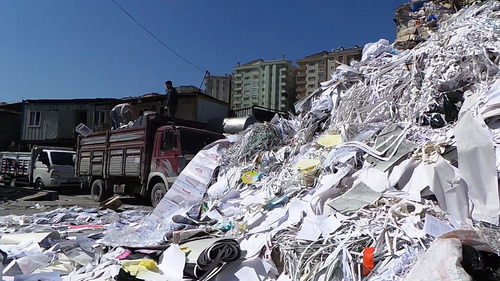
Every day in Istanbul more than 1 kilo of waste per person is accrued. In this city, approximately 20 thousand tons of waste are produced every day. With time, waste which can be recycled turns into waste again. In a never ending cycle, while processed material turns into raw material and raw material turns into processed material again, the city-dweller’s own waste leaves a mark on the city, whether he wants it to or not.
In Istanbul, more than 1 kilogram of waste per person is accumulated every day. This translates to more than 20 thousand tons of waste every day. In time, the waste that can be recycled (is recycled?) becomes waste again. It is a never-ending cycle. While processed material turns into raw material and that raw material becomes processed again, the urban-dweller’s throw-away waste leaves a mark on the city – whether one is cautious about it or not. How realistic is the property inherent in these numbers, forcing people to face themselves and making them uneasy? What does this outburst of perception, that all of a sudden makes us all environmentalists and domestic waste sorters, express? In an essay where she comments on Zizek’s “Ecology is the new opiate of the masses”. Sanem Yardımcı explains this “enlightenment” in the following manner:
How realistic is the message inherent in these numbers, that things must change? How realistic is it to think that people will face facts and all the while making them uneasy. What do these eye-opening numbers show us, that all of a sudden converts us into environmentalists and conscientious sorters of our daily, throw-away materials? Sanem Yardimci comments on Slavoj Zizek’s “Ecoology is the new Opiate of the Masses”, and explains this new “enlightenment” in the following manner.
In one of his articles Slavoj Zizek argues that ecology, the new opiate of the masses, is the ideal candidate for becoming the dominant ideology of global capitalism. Zizek draws a parallel between the mistrustful environment created by global capitalism on the axis of fear of terrorism and the mistrust that is against change, development and progress, feeding on the ecologists’ fear that the world will come to an end as the result of a disaster. According to him, ecology, just like religion is made up of an unquestionable authority, that is, it sanctifies nature and conceptualizes it as: “something that cannot be conceptualized as a whole, like a power that contains eternal secrets, that we trust and will not be able to take under control.(…)Politics that environmentalism has kicked out of the door, return through the chimney in the form of sovereign political perception. The union of the mistrustful environment of global capitalism and the disaster scenarios, as it were, creates a new religion. (1)
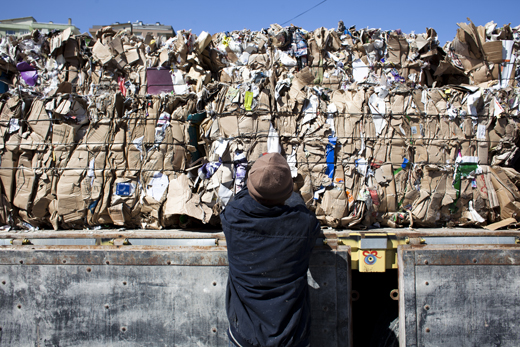
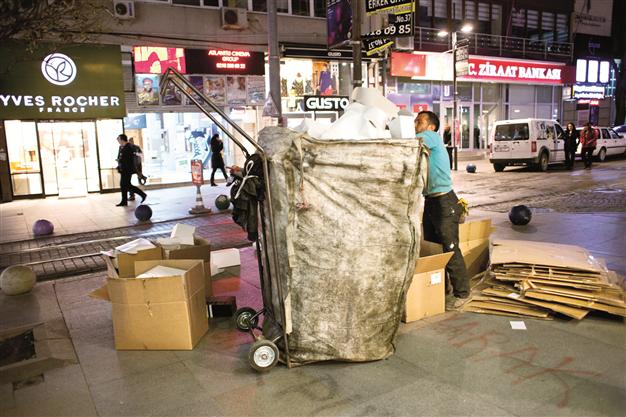
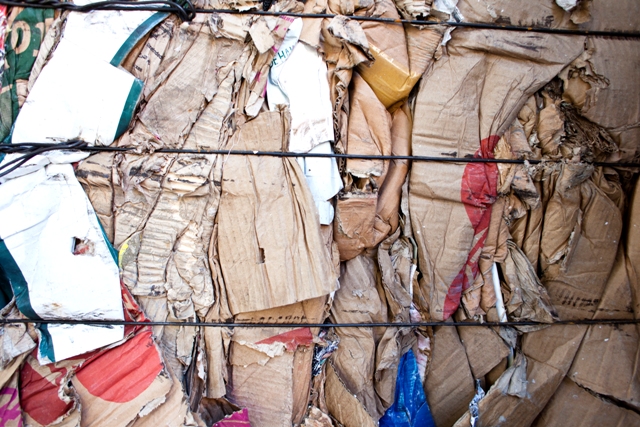
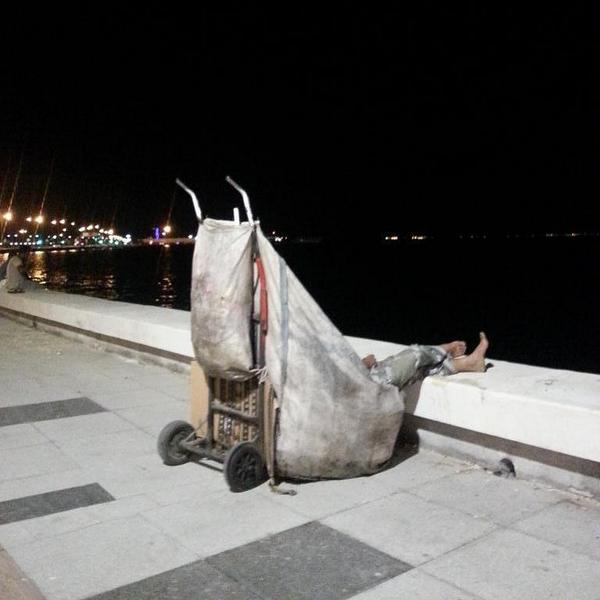
The everyday reality of this paragraph can be seen in the response of neighborhood residents to a trash collector in Ümraniye. He is making a meager living by collecting waste paper on the street: “We won’t give the papers to you, we’ll give them to a municipal company, they recycle the paper.” Smiling, the collector named Metin continues summing up the dialogue with the neighborhood residents “As if we are sending the paper to Paris, it goes to the same factory, man. I tell them I want to buy it, but they still don’t accept” Another collector at the table chips in “Maybe they didn’t want to give you the paper because they didn’t like the look of you?” In response to this, silent smiles appear around the table. Ironic expressions are then mentioned around the table that are intended to diversify the word “recycling”. Suddenly, someone gets to the point. “If the CHP or the MHP won these elections, do you think they would push us out? Look, Ahmet could still be considered a child, his father is disabled, he can’t walk. There’s no work in Siverek, so he came here. The kid is supporting 10 people collecting paper.”
Let us take it from the beginning again: Every day more than 1 kilo of waste per person is accrued in Istanbul. In this city we produce approximately 20 thousand tons of waste every day. With time, the waste which can be recycled turns into waste again.
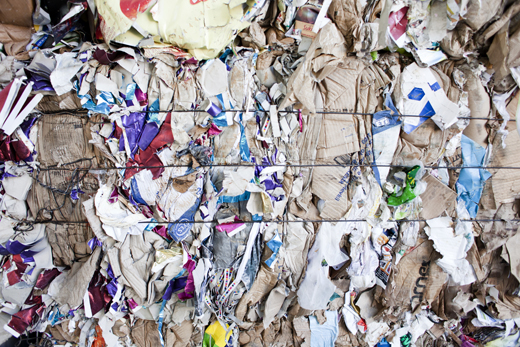
In a depot in Beyoğlu, the collectors explain that the work is not the same as it used to be. In the old days (the early2000s), the municipality would pay for the electricity in the depot, since the collectors facilitate the municipality’s work to an important extent. Now the vehicles driving around with the logo of Beyoğlu municipality, distributing “qualified waste bags” to virtually all workplaces, caution employees at workplaces against giving paper to the collectors. For a while they were taking our carts saying “It’s forbidden to do this work”, now they don’t take them anymore. But now they caution the places from which we take paper “Don’t give the paper to them”. Due to that, we have much less work.” Another collector chips in: “There is less work, but the number of collectors is increasing, it’s increasing every day” Another one gets straight to the point “These Syrians ruined us. They don’t take the paper, but all of the garbage. What are they doing in Istanbul, in Beyoğlu? There are lots of camps in Hatay and Urfa, why do they bring them to the center of Istanbul?”
The discussion continues for a while before getting to the issue of “So what are we doing here with cameras in our hands?” We try to explain best we can. We talk about the problems experienced by the recycling workers. We say “We want to talk about the problems experienced by the recycling workers in response to the “recycling” commercials in Istanbul, Ankara, and all cities.”We try to sum up our work by pointing out “The support we get for doing this work is equivalent to your monthly salary”. “Never mind that, the other day a tourist came up to me, he took several pictures of me, then he brought me to a forested area, he took me to a tree and made me collect cherries. He kept saying “lift your arm like that, no pull your leg like that” and took lots of pictures of me” Another one chips in again: “A tourist took my pictures too, he walked around with me the whole day, I didn’t understand why he was doing that, we spoke with gestures the whole time”. Everyone in the depot has had a “tourist” adventure, these are told in turn. A friend of mine said: “The tourists in Beyoğlu just love taking pictures of the stray dogs, the collectors, and the transsexuals”. When I hear all these stories, I feel like saying “We’re not tourists.”
Let us take it from the beginning again: Every day more than 1 kilo of waste per person is accrued in Istanbul. In this city we produce approximately 20 thousand tons of waste every day. It is possible to think of the city’s relationship with waste as a symbol of “development”. However, if we cannot conceive exactly what we mean by waste, these 20 tons will just remain a large number, or if we do not figure out who teaches us what waste is, the issue will remain an “ecological opiate”. Then instead of starting with the 20 tons, we have to ask some questions:
When does waste become a problem? When it pollutes the streets? When it is not collected? What / who pollutes the streets? The documentary “Taşkafa” (2) tells the story of Beyoğlu from 1910. An English gentleman is surrounded by stray dogs while walking in Galata at night. While the English gentleman tries to scare the dogs with a stick, the dogs start barking even more. Whereupon the gentleman tries to run away, falls to the ground and dies. Probably this person was someone important, because a while later the English government sent a note to the Ottoman Empire saying: “Do something about your stray dogs, our citizens are dying”. The Ottoman Empire was embarrassed about this note and decided to clear streets of stray dogs.
An animation called “Köpek Adası” (3) adds more detail to this sad story. The Ottoman Empire brings a consultant from Europe to get rid of these stray dogs. However, the government officials do not like the consultant’s suggestions (poisoning all dogs and making use of their skin and fur, domesticating chosen “breeds”) and an “Ottoman style” “cleanup” starts: They shipped off the 60 thousand stray dogs in Istanbul to the island known today as Hayırsız Ada, and we can be fairly sure that the dogs died there by eating one another. According to hearsay, the howling of the dogs was heard in Istanbul for months.
The cleanliness of the street is the place where “the struggle against waste” is the most visible. Because waste is actually something which should not be seen, and something which should be got rid of or recycled in the places where it is seen. Or this is at least what they taught us. This cleaning changes with time depending on what needs to be cleaned and who is cleaning it. When we look at Istanbul pictures from the night of September 6,1955, we see that the surface of Istiklal Street is overflowing with 5-10 cm. thick layer of waste. Furthermore, in the late hours of night, while tanks are driving around on the street, trucks are loading “non-recyclable waste”….Really, who threw who in the garbage overnight and why, and who took what from the garbage and got wealthy?
Could the struggle of “clearing the streets of waste” be the sleaziest face of racism, or even homophobia? What kind of waste comes to mind holding back tears and talking about the day your transsexual friend was found in the Mamak garbage dump in Ankara, having been beaten up in the midst of people yelling “go back to your village, what are you doing here?” While all these “cleaning efforts” were made “officially” for years, who remembers April 28, 1993, when marsh gasin a mountain of garbage in Ümraniye caused an explosion, the result of which 27 people were killed, 12 went missing, and the missing bodies could not be found?
Let us start from the beginning one last time: Every day more than 1 kilo of waste per person is accrued in Istanbul. When I asked for permission to shoot a collector in Beyoğlu, he first said, with a stern facial expression: “I want what the most expensive model on the market gets” Then he added, laughing “But I act well, just so you know…”. When I left the collectors’ depot in Ümraniye, I was taken a back with excitement when I heard a voice behind me: “Look at that! Someone is taking us seriously and will make a documentary about us!”
If our minds are not clouded by this “ecological opiate” that Zizek talks about, we accrue more than 1 kilo of waste in Istanbul. With the hope of being able to take a look at this waste together…
1 April 2014 – LeftoverWorks Collective
1) http://www.ekolojistler.org/ekolojizm-ler-ve-cevrecilik-uzerine-sanem-yardimci.html Sanem Yardımcı, Ekoloji Kolektifi, Temmuz 2010
2) Taşkafa Bir Sokak Hikayesi, Yönetmen: Andrea Luka Zimmerman, Yapım: Yalan Dünya, 2013
3) Hayırsız Ada/İstanbul’un Köpekleri (Chienne d’histoire) Yönetmen: Serge Avédikian, Yapım: 2012